Category: Child health

Articles about the child’s health

Feeding preterm infants

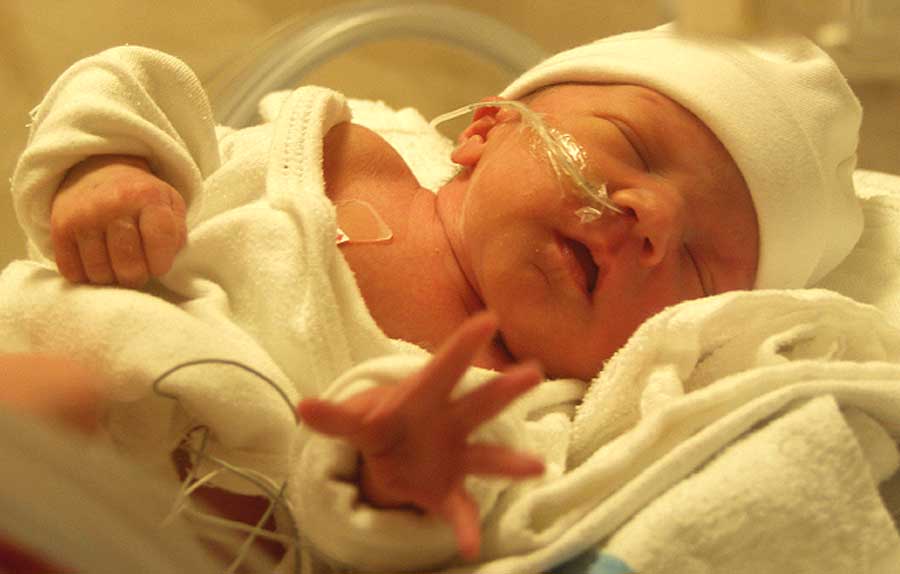
Feeding preterm infants in the neonatal period is critical. This task is quite difficult, because these children[ru] reduced tolerance to food. In addition, infants with severe prematurity are not only unable to take the breast, but also to suck from a bottle or pipette due to the immaturity of the sucking reflex. The difficulty lies in the fact that, along with low stamina to food there is an increased need for it. Such a child with an initial weight of 1800 g doubles its weight to 3 months, and 6 months to triple it. The rapid growth of these children require a lot more protein and minerals.

Feeding preterm

If the child takes the breast, it is applied to the chest. Since children tire quickly sucking, they should be applied to the chest of 3 to 5 times a day, then finish feeding with expressed breast milk from a bottle with a spoon, a pipette. If a child can not suck, then it is fed with a spoon, a pipette or a catheter, which should be entered only through the mouth 6-7 times a day. At ‘feeding a premature baby should gradually move from one mode to the other, more natural, from spoons to the pipette, and then to the dummy. When you see a good sucking movements can be applied to the child’s chest.– Далее –
Search something else interesting:

Caring for premature babies

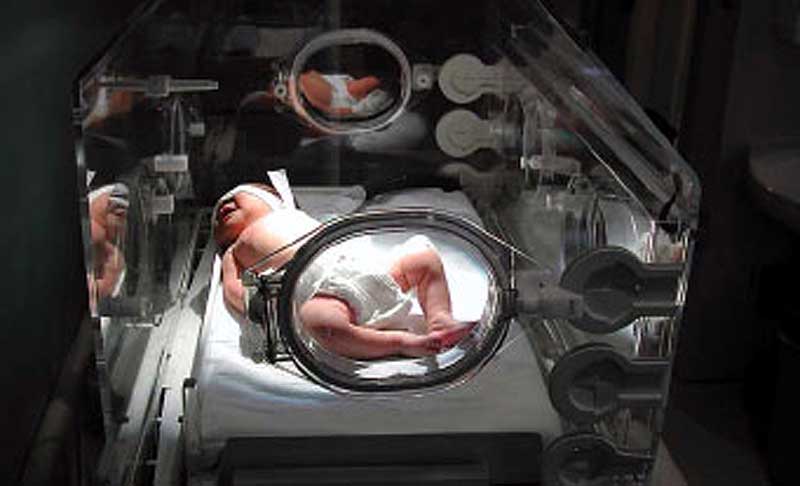
Environmental conditions and proper maintenance are important in preserving life premature baby. When properly organized care premature infants in the first days of life is well developed, and by the end of the first year of their weight increased by 5-7 times. First we need to monitor the condition of the premises in which the premature infant. Floor should be cleaned 3-4 times a day, room air 5-7 times. Under no circumstances should there be in a room where the new-born adults with symptoms of influenza, acute respiratory illness.

Care for premature babies

For premature infants is equally dangerous as cooling and overheating. Temperature due to overheating, a child may rise to 37-38 °C, hypothermia – lowered to 35 °C. At home, to warm the child has to use conventional heaters. Hot water bottle filled halfway with hot water, tightly closed and placed near the child from the sides and legs. They have to change every 3-4 hours. Do not put a heating pad on the chest and abdomen of the child, it is very difficult to breath.– Далее –

Premature babies

Child[ru] called premature if born before the end of fetal weight below 2500 g, and a body length of less than 45 cm Medical Statistics notes that there were many cases when it was possible to save the life of a child born weighing 900 and even 600 g.

Premature babies

With this weight and height functions of all premature infants are underdeveloped, so to extrauterine existence of a child is ill suited. Premature infants, along with general weakness broken thermotaxis. These children are equally fast temperature can rise to 40 °C or drop to 35 °C. The lower weight of the child, the more he pronounced instability of body temperature and its tendency to volatility. Breath-preterm infants surface, there is a tendency to asphyxia (suffocation). Due to the fact that the immunity of their sharply reduced, the most common disease in these children in the first months of life are respiratory tract infections.– Далее –

Processing of a skin of the newborn

The skin[ru] of the newborn is necessary for processing daily at a morning toilet and after each emiction or a defecation, and also after bathing. After intimate washing a skin of the kid dry applying by a matter to a body, and then inguinal and cluneal dermal cords grease with a cream or powder. In order to avoid damage of very gentle, easily vulnerable integuments of the newborn, all subjects adjoining to a skin, should be soft.

Skin of the newborn


To process a skin it is necessary only blotting movements. At a morning toilet the person of the child wash with boiled water; eyes[ru] process a weak solution of Furacilinum; nasal courses and external acoustical passages in the presence of crusts wipe the hard wadded wicks moistened in sterile vegetable oil; dermal cords wipe the cotton plugs moistened sterile vegetative or a liquid paraffin, a children’s cream, or slightly powder Talcum or a children’s dusting powder. In each separate case individual selection of agents is necessary. In case of occurrence of a boring an agent used for processing of a skin, it is necessary to wash off carefully with soap and to use another.

Hygiene of the newborn

In the house of the newborn it is necessary to be prepared for occurrence carefully. If it is not possible to make apartment face lifting general cleaning is obligatory. For normal development and creation of the best hygienic conditions, to the child, it is as though small was, in apartment own corner where its bed, a table with leaving subjects would take places, a bedside table with personal things is necessary. This place should be the most light, free from unnecessary for care of the child of things and subjects. That sunlight was less, parents often hang up dense curtains and curtains on windows. To do it it is not recommended — the sun for the child as it is necessary, as cleanliness of a premise, air, linen, ware.

Hygiene of the newborn

Before for the first time putting the child in a bed, it should be washed up well warm water with soap and further to wash weekly. The bed of the child should be equal, a mattress — rigid, not caving in under gravity of the kid (the bent position is very harmful to its not strong skeleton.). The pillow during first time is absolutely not necessary. It is possible to use small flat (not down) a small pillow later. A mattress on three quarters cover with an oilcloth, and from above a bed-sheet. It is not necessary to veil a bed a bed curtains or a curtain as it breaks ventilation of air and, besides, deprives of the child of light so necessary for it. In order to avoid diseases of a skin and infection with infectious diseases it is impossible to put the child in bed with other children or adults. It is necessary to remember, that healthy [ru] adult children can be carriers of bacteria which do not cause disease in them, but can be dangerous to children of early age. It is not recommended to use instead of a bed a low carriage, since. Rising at walking of adults the dust from a floor gets on the child, and in a dust microbes which can be dangerous to the newborn contain. Everything to what the child adjoins, should contain in the strict cleanliness.– Далее –

Development of the child from 1st till 12 months

In the end of 1st and in the beginning of 2nd month at the child conditioned reflexes start to be formed. It means that the cortex of a brain starts to ripen and sense organs are differentiated.

Formation of conditioned reflexes at children[ru] is bound exclusively with medium surrounding them, a regimen, care of them. As at the child of a cell of a cortex of a brain are developed insufficiently again formed reflexes at it are fragile and easily die away under the influence of strong stimuluses. If the child gets to an unusual situation for it it quite often loses the got skills. Unusual borings and impressions cause an excessive boring of a cortex of a brain and diffusion of this boring that is expressed in anxiety of the child, whims, crying, cry or block, slackness and drowsiness.

Development of the child

The newborn child almost all time sleeps. It is absolutely helpless, does not hold a head, not in a condition to change position of the body, randomly moves arms and feet. To the beginning of 2nd month the child starts to smile, look after bright, large subjects. In process of development of the central nervous system and a musculation the child from 5-6 weeks starts to hold a head, and by 2 months holds it already well and, laying on a back, can lift it, in position on a stomach watches moving subjects and turns behind them a head. At this time the child starts to react on pull, a smile and conversation — briskly moves, smiles.– Далее –

The basic periods of the children’s age

The children’s stage of development of the person (Основные периоды детского возраста) can be parted for following periods:

  • 1. The period of a pre-natal fetation.
  • 2. The period newborn.
  • 3. The thoracal period.
  • 4. The period of a milk teeth.
  • 5. The adolescence period.
  • 6. Description puberty period (boys and girls).

Periods of the children's age

The period of a pre-natal fetation lasts on the average 270 days. At this time there is exclusively a foetus rapid growth, the basic functional and morphological features of the child are pawned and formed. Therefore high-grade development of the future newborn depends appreciably on a state of health [ru] of mother, it deliveries, a way of life, a psychological condition, an exercise stress! The conditions of a life of mother during this period are more favorable, the the child will be more healthy. Alcohol, strong tea, coffee, too acute and spicy dishes should be completely excluded from a food of mother.

The period newborn is the period of the adaptation of the child to new conditions of a life. It begins after sorts from the moment of a dressing of a cord and 18-24 days last.– Далее –

Notice to parents

Dear parents – mums and daddies!

Before you will treat the child[ru], read please these rules and observe them!

Notice to parents

1. Do not treat the child grasses and do not resort to treatment by folk remedies without consultation of the doctor[ru]-pediatrist.

2. Do not undertake in house conditions treatment of such serious diseases[ru], as a pneumonia, an infectious disease, a meningitis, an encephalitis, etc.

3. Do not apply treatment by grasses, infusions, broths to children who have not reached 5-6-year age.– Далее –